





Butterfly roof
A butterfly is in effect an inverted gable roof, where the lowest point of the roof is at the centre line, whist the highest at the edges or supporting walls. The form may also be called a V roof, denoting the shape and some times a valley roof, though this is usually used to describe the pitched valleys created by two pitched gale rooves meeting.

(Kenneth Allen, Orangefield Park CC BY-SA 2.0, Taxiarchos228 Lörrach GNU Free D L, Taxiarchos228, Lörrach GNU Free D L, and guenth1 Creative Commons CC0 1.0 Universal Public Domain Dedication.)
The butterfly roof has association with modernism and to some extent warmer climates, with the wings extended to form shading devices. The form allows high level clerestory widows to be located at the corners of the building often given a modern look and feel to a building. Famous modernist architects whom have incorporated butterfly roofs into their design include: Le Corbusier ( Maison Errazuriz, 1930), Oscar Niemeyer (Pampulha Yacht Club, 1943) and Marcel Breuer (Geller House, 1945). The form is often associated with 1950s and 1960s architecture in California, where the technique can be found on numerous individual houses of the time. Butterfly are however also today associated with simple devices for shelters such as those found on petrol forecourts, railway station platforms and so on as seen in the example below.

(Flickr by el-toro licensed under the terms of the cc-by-2.0 and GNU Free Documentation License by Frettie)

(CCA Alike 2.1 Japan: LERK and Verviers-Central perron public domain.)
Environmentally speaking the butterfly roof to some extent has great potential in warmer climates, to act as shading device to help cool buildings as well as a device to simplify rainwater collection. A variation on the butterfly, used in hotter climates is known as a flying or fly roof, that is a roof that is separated from the bulk of the house, flying above it. These roofs are normally lightweight, and supported by short legs and structure, to leave a visual gap from the actual roof and ceiling of the building. This creates a shading layer with a gap allowing cool breezes to blow though creating a cooler micro climate around the building. Examples of fly roofs can be seen in the Architecture of Peter Stutchbury and Dunn and Hillam in Australia and Atrticle 25 with Max Fordham engineers in Burkino Faso.
[edit] Related articles on Designing Buildings
Featured articles
Check out some of the best features and news from Designing Buildings as well as key stories from around the web.
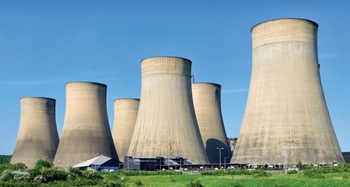
The heritage of nuclear and conventional power stations.
New measures to stop people being ripped off

Government to protect families from cowboy builders and aggressive bailiffs.

New Futurebuild showcase brings an innovation-first approach.
National Planning Policy Framework
Understanding the 2026 changes.
ECA's public affairs priorities

Member consultation opens to shape priorities for 2027 to 2030.

Dutyholder responsibilities from 1 July 2026.
Where performance meets practice

The Building Envelope Stage at UKCW Birmingham.

CIAT publishes briefing on planning reforms.
Leaders in Learning for Practice Network

Call for conservation leaders in learning to register interest in new network.
The importance of early engagement
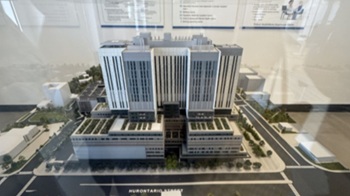
Construction lessons from the Trillium HealthWorks Experience Centre.
Mayors are to be given planning call in powers
Mayors across England will be able to make the most important planning decisions.
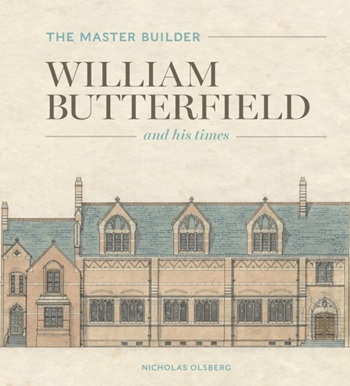
The Master Builder: William Butterfield and his times. Book review.